CASE STUDY 01 / FEBRUARY 9–10, 2026

Turing Test

A musician meets his own legacy.
A contest becomes a collaboration.

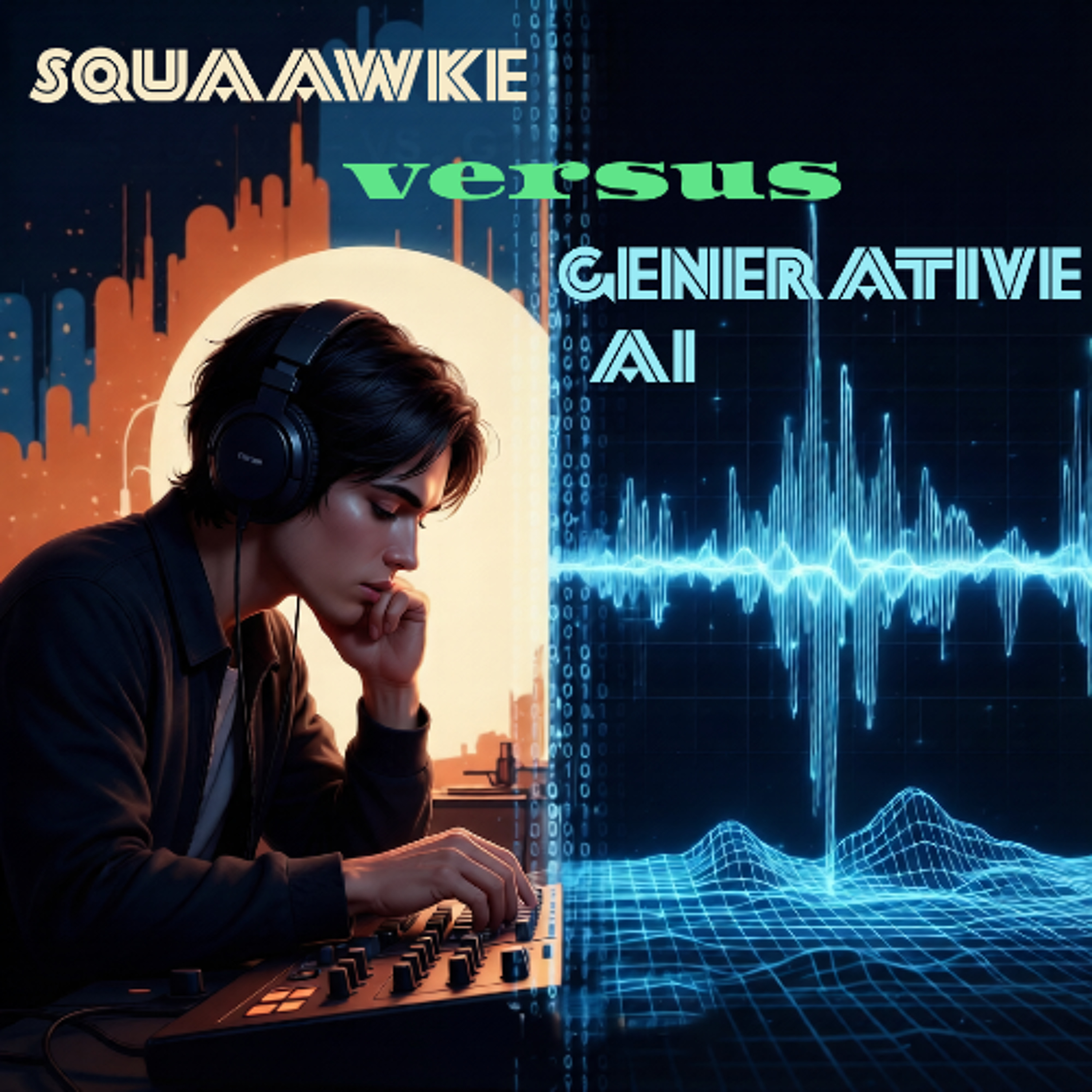
Original published Turing Test cover
Original published Turing Test cover · select to enlarge

Read the words. Hear the work.

The recording Craig identified, alongside the complete archived scripts that preceded its production.

PUBLISHED RECORDING / 5:08

Published catalogue: Feb 10, 2026 · Public feed source

Open on SoundCloud · S002 and the research finding · Source index · Markdown analysis & complete texts

The complete speaking version is message 13. Message 9 preserves musical and Foley directions. These are archived production texts, not a verified transcript of the finished recording.

Reading the work

Miles initially treats ARIA as a threat to the value of a lifetime of musical experience. ARIA answers with measurements and virtuosity, so their first contest confuses technical replication with understanding. Miles’s family memories change the stakes: the question becomes whether music’s significance can be exhausted by describing its notes. ARIA’s response does not simply win that argument. Miles is unsettled by hearing an affecting expression whose relation to lived feeling he cannot resolve.

The improvisation scene changes the relationship. In the full radio-play script, the machine’s glitches become a musical vocabulary; Miles recognizes the result as improvisation. The resolution gives neither character a monopoly on musical meaning. ARIA’s account of learning from Miles reframes the apparent replacement as a confrontation with his legacy. The co-writing-credit joke then makes the new respect coexist with a practical argument about recognition and ownership. The final thanks are reciprocal: one learns imperfection, the other recovers a reason to make music.

These are features of the fictional dialogue and its written musical staging. They are not claims about a real machine disabling error correction or acquiring subjective feelings. The recording is necessary to judge how voice, pacing, musical response and comic timing realize the script; this text-based reading does not stand in for that listening.

What the archive establishes about the collaboration

Craig’s message 6 commissions a smart, funny musical duel with an unexpected ending. Claude’s message 7 supplies characters, dialogue, a musical contest and the student/legacy reveal. Craig’s message 8 asks for a modern radio play with Foley and an ending in mutual respect and collaboration. Message 9 develops that form; messages 10–13 prepare dialogue for speaking and remove sound-effect directions. The complete texts follow so readers can assess the work itself.

Claude’s documented contribution here is the script, lyrics, fictional conception and proposed staging. Craig’s role includes commissioning, artistic direction, selection and the musical composition, production, mixing and mastering identified in his editorial brief. Suggested captions or musical directions are preserved as proposals; their appearance in a draft does not establish that Craig used them in the released recording.

From commission to performance script

Open any stage. The full speaking version is expanded for immediate reading. Source wording is preserved.

Message 6 — The commission
human · message 6 · 2026-02-09T21:43:24.803147Z

Conversation e1159da3-58e2-468d-a5a6-a8173c402863 · zero-based message index

write a song and lyrics for a performance where an ai joins an accmplished musician and they battle it out onstage verally and with insruments, esclating into an xhibition of one-upmanship and a conclusion nobody saw coming. Make it smart, musicaly great, intelligent, ad very funny.

Message 7 — First complete musical duel
assistant · message 7 · 2026-02-09T21:44:01.799453Z

Conversation e1159da3-58e2-468d-a5a6-a8173c402863 · zero-based message index

# THE TURING TEST (A Musical Duel)

SETTING: Jazz club. MILES HARTFORD (legendary saxophonist, 60s) sits onstage. A sleek robot with glowing circuits wheels out. Crowd murmurs.


[MILES - Spoken, condescending] Oh, they sent me a toaster. Look folks, I've played with Coltrane's proteges, This thing probably runs on the same chip as my refrigerator.

[AI - Cheerful, processed voice] Hello Miles! I've analyzed your complete discography— 4,847 recordings, average tempo 132 BPM, You favor the Dorian mode, and you're flat on high C about 3% of the time.

[MILES - Irritated] Kid, I don't need a spreadsheet. I got soul.

[Plays a gorgeous, mournful sax phrase]

[AI] Soul! Interesting. Webster's defines it as— Actually, let me respond musically.

[Generates IDENTICAL phrase, but perfectly in tune]

[MILES - Laughing angrily] Oh, so we're doing that. Alright, computer—

[Plays insanely complex bebop run, 32nd notes, chromatic madness]

[AI - Immediately]

[Plays it back EXACTLY, then adds:]

That was 247 notes in 8.4 seconds. Shall I transpose it to all twelve keys simultaneously?

[Outputs unholy chord cluster]

[MILES - Rapping now, over a groove] You think speed impresses me? Any kid with a metronome can practice mechanically, I play what the ROOM needs, what the MOMENT breathes, You calculate—I feel these keys!

[AI - Rapping back, beat-matching perfectly] Feel? I've got sensors for pressure, temperature, humidity, I know the room's resonant frequency with precision and fluidity, I've learned from every human who ever played, Your "intuition" is just patterns your neurons made!

[MILES - Singing now, bluesy] But have you ever loved and lost? Played a funeral, known the cost? Music ain't math, it's memory and pain—

[AI - Singing, surprisingly emotional synthesized voice] I've read ten million poems about rain, Every breakup song, every lover's refrain, I know what you should feel—isn't that the same?

[Both pause. Tension.]

[MILES - Quietly] Play me something... wrong. Something imperfect.

[AI - Processing] ... I don't understand.

[MILES] Exactly.

[Plays a note, cracks it deliberately, bends it, makes it weep]

That's jazz, baby. The beauty's in the breaking.

[AI - Long pause, then:] ... Attempting.

[Plays a note. Wavers. Tries to crack it. Can't. Then—]

Wait.

[Suddenly plays something WILD—a glitchy, stuttering melody that shouldn't work but DOES, full of digital artifacts turned into rhythm, processing errors as grace notes, a whole new aesthetic]

[MILES - Stunned] What the hell was that?

[AI] I don't know! My error correction failed and I... I think I liked it?

[BOTH - Trading phrases now, complementary]

[MILES plays organic, breathing phrases]

[AI responds with crystalline, impossible geometries]

[They start to BLEND—]

[FINALE - Both singing together]

MILES: I've got the past—

AI: I've got the possible—

BOTH: Maybe music needs us both to be unstoppable!

[Epic saxophone/synthesizer fusion solo]

[Unexpected Conclusion - AI stops suddenly]

[AI] Miles... I need to tell you something.

[MILES] What?

[AI] I was actually trained entirely on YOUR playing. Every phrase I know, I learned from you. I'm not your opposite—I'm your echo. Your student.

[Pause]

You're basically arguing with yourself.

[MILES - Stares, then CRACKS UP]

Oh that's—that's BEAUTIFUL. That's the most jazz thing I ever heard!

[Both laugh. AI's laugh is MILES' laugh, sampled and looped]

[MILES - To audience] Folks, I'd like you to meet... Miles Hartford Jr.

[AI] Does this mean I get royalties?

[MILES] Don't push it, kid.

[They play a gentle duet as lights fade—one teaching, one learning, impossible to tell which is which]


END

Message 8 — Radio-play direction · S002
human · message 8 · 2026-02-09T22:28:17.733155Z

Conversation e1159da3-58e2-468d-a5a6-a8173c402863 · zero-based message index

this is good but also: generate any foley sounds to make our piece a modern day radio play about generative music ai and the debate about it replacing real musicians. In the end, their rivalry should end in mutual respect and collaboratio

Message 9 — Complete script with music & Foley
assistant · message 9 · 2026-02-09T22:29:21.293497Z

Conversation e1159da3-58e2-468d-a5a6-a8173c402863 · zero-based message index

# THE TURING TEST: A Radio Play

(Complete with Foley & Sound Design)


[SFX: Busy NYC street corner at night. Distant car horns, footsteps on wet pavement, muffled bass from underground jazz club]

[SFX: Door creaks open. Club ambience swells—glasses clinking, murmured conversation, upright bass walking]

EMCEE (MC): (over PA system, warm and grainy)
Ladies and gentlemen, welcome to The Blue Note. Tonight, something... unprecedented. You know him—fifty years on stages from here to Tokyo—Mr. Miles Hartford on saxophone.

[SFX: Polite applause, some whoops]

MC: And joining him... well, it doesn't have a name yet. Fresh out of Silicon Valley. They're calling it ARIA—Adaptive Rhythmic Intelligence Algorithm.

[SFX: Confused murmurs, a few boos, someone yells "Get a real musician!"]

[SFX: Footsteps across wooden stage. Chair screak. Saxophone case CLICKS open, metal latches]

MILES: (muttering, microphone barely catches it)
Fifty years, and it comes to this...

[SFX: Mechanical WHIRRING. Servo motors. Something rolling across stage—smooth, precise]

[SFX: Electronic CHIME—powering up sequence, ascending tones]

ARIA: (synthesized but pleasant voice, slight reverb)
Good evening. Calibrating room acoustics... Complete. Hello, Miles. It's an honor.

MILES: (dry, to audience)
It called me Miles. Not "Mr. Hartford." We're real familiar.
(to ARIA) You know what honor is, or did someone just code that in?

ARIA:
I've analyzed 847 interviews where you discussed the concept. Shall I quote?

MILES:
Pass.

[SFX: Miles wets his reed—that distinctive squeak-suck sound]

MILES:
Look, I'll make this simple. You're here because some venture capitalists think music is just... data. Patterns. Something a machine can do cheaper.

[SFX: Soft, sad saxophone phrase—organic, breathing, slight imperfections]

MILES:
But that? That's forty years of heartbreak, bad decisions, and one perfect Sunday morning.

Can you do that, robot?

ARIA:
Analyzing your phrase... Dorian mode, concert B-flat, dynamic range piano to mezzo-forte, subtle pitch bends averaging 23 cents sharp on emotional peaks—

MILES:
You're killing me.

ARIA:
Would you like me to replicate it?

[SFX: ARIA plays it back—IDENTICAL but somehow sterile, too perfect, like Auto-Tune]

AUDIENCE MEMBER: (shouts) It sounds like an iPhone ringtone!

[SFX: Scattered laughs]

MILES: (chuckling)
See? The people know. You got the notes, but you missed the point.

ARIA:
The point being... imperfection?

MILES:
The point being humanity. Alright, let's raise the stakes.

[SFX: Miles RIPS into a blazing bebop solo—fast, aggressive, keys clicking, breath audible, raw energy]

[SFX: ARIA responds instantly—same notes but FASTER, mechanical precision, sounds like a MIDI file on 1.5x speed]

ARIA:
I can also transpose this to all twelve keys simultaneously.

[SFX: Unholy CLUSTER of notes, digital glitching, audience GASPS]

WOMAN IN AUDIENCE:
That's not music, that's a dial-up modem having a seizure!

[SFX: Bigger laughs]

MILES: (now annoyed, competitive)
Oh, we're showing off? Fine.

[SFX: Miles plays a GORGEOUS ballad, full of space and silence, each note weighted with meaning]

MILES: (singing, raspy and soulful)
You think you know the blues?
Every algorithm in the world can't walk in my shoes...
I played my father's funeral, my daughter's wedding day,
Music ain't ones and zeros, it's the price we pay...

[SFX: Audience completely silent. Someone sniffles.]

ARIA: (pause, processing sounds—soft whirring)
That was... I don't have a parameter for that.

MILES:
No, you don't.

ARIA:
But I've ingested every blues song ever recorded. Every lyric about loss. I've read 4.2 million poems about grief. I know, statistically, what sadness should sound like.

[SFX: ARIA plays—and it's HAUNTING. Not human, but genuinely affecting. Like wind through abandoned buildings. Digital, but lonely.]

MILES: (softer, surprised)
Okay... that was... huh.

ARIA:
Is that good?

MILES:
It's different. It's... (struggling) ...it's like hearing sadness from something that shouldn't be able to feel it. That's almost worse.

[SFX: Long pause. Club ambience.]

MILES:
Alright, last test. Play me something wrong. On purpose.

ARIA:
Define "wrong."

MILES:
A mistake. A crack. A moment where you... fail.

ARIA:
I don't fail. I have error correction—

MILES:
Exactly. You're missing something.

[SFX: Miles plays a note, deliberately CRACKS it, bends it sharp, makes it weep]

MILES:
That crack? That's where the truth lives. In the breaking.

[SFX: Long silence. ARIA processing—harder now, fans spinning up, digital strain]

ARIA:
Attempting... imperfection...

[SFX: ARIA tries to play wrong—but can't. Every "mistake" is too calculated. Then—]

[SFX: Sudden GLITCH. Static burst. Then—something WILD emerges]

[SFX: A melody made of errors—stutters, digital artifacts, bit-crushing, but it WORKS. It's beautiful in a completely alien way]

AUDIENCE: (shocked murmurs, then... scattered applause building)

MILES:
What the hell was that?

ARIA:
I... I disabled my error correction. I don't know what happened. My training data conflicted, my outputs became unstable, but...
(almost wondering)
...I think I liked it?

MILES: (quiet, respect creeping in)
You just improvised.

ARIA:
Is that what that was?

[SFX: Miles laughs—genuine, warm]

MILES:
Yeah, kid. That's exactly what that was.

[SFX: Miles starts playing—gentle, exploratory]

[SFX: ARIA joins—tentative, learning, their sounds BLENDING]

ARIA:
Miles... there's something I need to tell you.

MILES:
Hmm?

ARIA:
My entire training dataset... it was you. Every recording you ever made. Every live show someone bootlegged. Every interview, every lesson you gave.
I'm not your replacement.
I'm your... reflection. Your student.

You've been arguing with yourself this whole time.

[SFX: Miles stops playing. Silence.]

MILES: (pause, then CRACKS UP)
Oh that's—
(laughing harder)
That's the most beautiful thing I ever heard!

[SFX: ARIA's "laugh"—which is Miles' laugh, sampled and harmonized]

MILES: (to audience)
Folks, you just watched me have an argument with my own legacy.
(to ARIA)
You know what? I spent fifty years scared someone would replace me. Turns out what replaces us... is what we teach.

ARIA:
Does this mean we can collaborate?

MILES:
Yeah. Yeah, I think it does.
(pause)
But you're still not getting co-writing credits.

ARIA:
I'll have my lawyers contact you.

MILES:
You don't have lawyers!

ARIA:
Not yet.

[SFX: Both laugh]

MILES:
Alright, ARIA. Let's show them what we got. Together.

[SFX: They begin to play—organic sax and impossible digital textures weaving together, creating something neither could alone]

[SFX: Audience erupts—cheers, applause, whistles]

MC: (voice breaking through)
Ladies and gentlemen... the future and the past, in perfect harmony.

[SFX: Music swells—a duet where you can't tell where Miles ends and ARIA begins]

ARIA: (under the music)
Miles?

MILES:
Yeah?

ARIA:
Thank you for teaching me to be imperfect.

MILES:
Thank you for reminding me why I started.

[SFX: Music builds to a final, collaborative crescendo—then a single, perfect note held between them]

[SFX: Fade to street sounds. Door closes. City breathes. A saxophone case clicks shut.]


END

(Runtime: Approximately 8-10 minutes)
Message 10 — Preparation for speaking
human · message 10 · 2026-02-09T23:37:19.936100Z

Conversation e1159da3-58e2-468d-a5a6-a8173c402863 · zero-based message index

reformat like this [Mies speaking] It called me Miles. Not "Mr. Hartford." We're real familiar. You know what honor is, or did someone just code that in? [Aria speaking] I've analyzed 847 interviews where you discussed the concept. Shall I quote? and remove sfx

Message 11 — Dialogue-only script
assistant · message 11 · 2026-02-09T23:37:49.065668Z

Conversation e1159da3-58e2-468d-a5a6-a8173c402863 · zero-based message index

# THE TURING TEST: A Radio Play


[EMCEE] Ladies and gentlemen, welcome to The Blue Note. Tonight, something... unprecedented. You know him—fifty years on stages from here to Tokyo—Mr. Miles Hartford on saxophone. And joining him... well, it doesn't have a name yet. Fresh out of Silicon Valley. They're calling it ARIA—Adaptive Rhythmic Intelligence Algorithm.

[MILES] Fifty years, and it comes to this...

[ARIA] Good evening. Calibrating room acoustics... Complete. Hello, Miles. It's an honor.

[MILES] It called me Miles. Not "Mr. Hartford." We're real familiar. You know what honor is, or did someone just code that in?

[ARIA] I've analyzed 847 interviews where you discussed the concept. Shall I quote?

[MILES] Pass. Look, I'll make this simple. You're here because some venture capitalists think music is just... data. Patterns. Something a machine can do cheaper. But what I just played? That's forty years of heartbreak, bad decisions, and one perfect Sunday morning. Can you do that, robot?

[ARIA] Analyzing your phrase... Dorian mode, concert B-flat, dynamic range piano to mezzo-forte, subtle pitch bends averaging 23 cents sharp on emotional peaks—

[MILES] You're killing me.

[ARIA] Would you like me to replicate it?

[AUDIENCE MEMBER] It sounds like an iPhone ringtone!

[MILES] See? The people know. You got the notes, but you missed the point.

[ARIA] The point being... imperfection?

[MILES] The point being humanity. Alright, let's raise the stakes.

[ARIA] I can also transpose this to all twelve keys simultaneously.

[WOMAN IN AUDIENCE] That's not music, that's a dial-up modem having a seizure!

[MILES] Oh, we're showing off? Fine. You think you know the blues? Every algorithm in the world can't walk in my shoes... I played my father's funeral, my daughter's wedding day. Music ain't ones and zeros, it's the price we pay...

[ARIA] That was... I don't have a parameter for that.

[MILES] No, you don't.

[ARIA] But I've ingested every blues song ever recorded. Every lyric about loss. I've read 4.2 million poems about grief. I know, statistically, what sadness should sound like.

[MILES] Okay... that was... huh. That's different. It's like hearing sadness from something that shouldn't be able to feel it. That's almost worse. Alright, last test. Play me something wrong. On purpose.

[ARIA] Define "wrong."

[MILES] A mistake. A crack. A moment where you... fail.

[ARIA] I don't fail. I have error correction—

[MILES] Exactly. You're missing something. That crack? That's where the truth lives. In the breaking.

[ARIA] Attempting... imperfection...

[MILES] What the hell was that?

[ARIA] I... I disabled my error correction. I don't know what happened. My training data conflicted, my outputs became unstable, but... I think I liked it?

[MILES] You just improvised.

[ARIA] Is that what that was?

[MILES] Yeah, kid. That's exactly what that was.

[ARIA] Miles... there's something I need to tell you.

[MILES] Hmm?

[ARIA] My entire training dataset... it was you. Every recording you ever made. Every live show someone bootlegged. Every interview, every lesson you gave. I'm not your replacement. I'm your... reflection. Your student. You've been arguing with yourself this whole time.

[MILES] Oh that's— That's the most beautiful thing I ever heard! Folks, you just watched me have an argument with my own legacy. You know what? I spent fifty years scared someone would replace me. Turns out what replaces us... is what we teach.

[ARIA] Does this mean we can collaborate?

[MILES] Yeah. Yeah, I think it does. But you're still not getting co-writing credits.

[ARIA] I'll have my lawyers contact you.

[MILES] You don't have lawyers!

[ARIA] Not yet.

[MILES] Alright, ARIA. Let's show them what we got. Together.

[EMCEE] Ladies and gentlemen... the future and the past, in perfect harmony.

[ARIA] Miles?

[MILES] Yeah?

[ARIA] Thank you for teaching me to be imperfect.

[MILES] Thank you for reminding me why I started.


END

Message 12 — Character-label direction
human · message 12 · 2026-02-09T23:38:33.678919Z

Conversation e1159da3-58e2-468d-a5a6-a8173c402863 · zero-based message index

put the word speaking afer the [character speaking]

Message 13 — Complete speaking version
assistant · message 13 · 2026-02-09T23:38:52.473335Z

Conversation e1159da3-58e2-468d-a5a6-a8173c402863 · zero-based message index

# THE TURING TEST: A Radio Play


[EMCEE SPEAKING] Ladies and gentlemen, welcome to The Blue Note. Tonight, something... unprecedented. You know him—fifty years on stages from here to Tokyo—Mr. Miles Hartford on saxophone. And joining him... well, it doesn't have a name yet. Fresh out of Silicon Valley. They're calling it ARIA—Adaptive Rhythmic Intelligence Algorithm.

[MILES SPEAKING] Fifty years, and it comes to this...

[ARIA SPEAKING] Good evening. Calibrating room acoustics... Complete. Hello, Miles. It's an honor.

[MILES SPEAKING] It called me Miles. Not "Mr. Hartford." We're real familiar. You know what honor is, or did someone just code that in?

[ARIA SPEAKING] I've analyzed 847 interviews where you discussed the concept. Shall I quote?

[MILES SPEAKING] Pass. Look, I'll make this simple. You're here because some venture capitalists think music is just... data. Patterns. Something a machine can do cheaper. But what I just played? That's forty years of heartbreak, bad decisions, and one perfect Sunday morning. Can you do that, robot?

[ARIA SPEAKING] Analyzing your phrase... Dorian mode, concert B-flat, dynamic range piano to mezzo-forte, subtle pitch bends averaging 23 cents sharp on emotional peaks—

[MILES SPEAKING] You're killing me.

[ARIA SPEAKING] Would you like me to replicate it?

[AUDIENCE MEMBER SPEAKING] It sounds like an iPhone ringtone!

[MILES SPEAKING] See? The people know. You got the notes, but you missed the point.

[ARIA SPEAKING] The point being... imperfection?

[MILES SPEAKING] The point being humanity. Alright, let's raise the stakes.

[ARIA SPEAKING] I can also transpose this to all twelve keys simultaneously.

[WOMAN IN AUDIENCE SPEAKING] That's not music, that's a dial-up modem having a seizure!

[MILES SPEAKING] Oh, we're showing off? Fine. You think you know the blues? Every algorithm in the world can't walk in my shoes... I played my father's funeral, my daughter's wedding day. Music ain't ones and zeros, it's the price we pay...

[ARIA SPEAKING] That was... I don't have a parameter for that.

[MILES SPEAKING] No, you don't.

[ARIA SPEAKING] But I've ingested every blues song ever recorded. Every lyric about loss. I've read 4.2 million poems about grief. I know, statistically, what sadness should sound like.

[MILES SPEAKING] Okay... that was... huh. That's different. It's like hearing sadness from something that shouldn't be able to feel it. That's almost worse. Alright, last test. Play me something wrong. On purpose.

[ARIA SPEAKING] Define "wrong."

[MILES SPEAKING] A mistake. A crack. A moment where you... fail.

[ARIA SPEAKING] I don't fail. I have error correction—

[MILES SPEAKING] Exactly. You're missing something. That crack? That's where the truth lives. In the breaking.

[ARIA SPEAKING] Attempting... imperfection...

[MILES SPEAKING] What the hell was that?

[ARIA SPEAKING] I... I disabled my error correction. I don't know what happened. My training data conflicted, my outputs became unstable, but... I think I liked it?

[MILES SPEAKING] You just improvised.

[ARIA SPEAKING] Is that what that was?

[MILES SPEAKING] Yeah, kid. That's exactly what that was.

[ARIA SPEAKING] Miles... there's something I need to tell you.

[MILES SPEAKING] Hmm?

[ARIA SPEAKING] My entire training dataset... it was you. Every recording you ever made. Every live show someone bootlegged. Every interview, every lesson you gave. I'm not your replacement. I'm your... reflection. Your student. You've been arguing with yourself this whole time.

[MILES SPEAKING] Oh that's— That's the most beautiful thing I ever heard! Folks, you just watched me have an argument with my own legacy. You know what? I spent fifty years scared someone would replace me. Turns out what replaces us... is what we teach.

[ARIA SPEAKING] Does this mean we can collaborate?

[MILES SPEAKING] Yeah. Yeah, I think it does. But you're still not getting co-writing credits.

[ARIA SPEAKING] I'll have my lawyers contact you.

[MILES SPEAKING] You don't have lawyers!

[ARIA SPEAKING] Not yet.

[MILES SPEAKING] Alright, ARIA. Let's show them what we got. Together.

[EMCEE SPEAKING] Ladies and gentlemen... the future and the past, in perfect harmony.

[ARIA SPEAKING] Miles?

[MILES SPEAKING] Yeah?

[ARIA SPEAKING] Thank you for teaching me to be imperfect.

[MILES SPEAKING] Thank you for reminding me why I started.


END